
Buying a 2-ton air conditioner is a normal decision. You compare cooling capacity, energy rating, features, price, and perhaps whether the AC will make your bedroom feel like Ooty in seconds.
But then comes the more practical question: What cable size should you use?
Choosing the right cable for an AC isn’t about picking a thick wire; the cable must safely handle the AC’s running current, starting current, installation conditions, cable length, and voltage-drop requirements.
So what cable size is ideal for a 2-ton AC?
Normally, 4 sq. mm copper cable is an accepted baseline for a 2-ton AC in most domestic installations. Still, it is wise to get the circuit evaluated by an electrical professional who can factor in the AC’s startup features, rated current, cable length, installation method, voltage drop, grouping, and ambient temperature in line with the manufacturer’s specs and local standards.
What Cable Size Is Commonly Used for a 2 Ton AC?
For a long run, a 2-ton AC copper wire size must safely handle a significant current; therefore, 4 sq.mm. wiring is a common starting point in residential installations. However, some may require 6 sq. mm, where the cable run is longer, installation conditions are less favourable, or the AC’s specified current and voltage-drop requirements call for a larger conductor.
Don’t choose the cable based on the AC’s tonnage alone.
A 2-ton inverter AC and a 2-ton non-inverter AC may have different electrical characteristics. Even two 2-ton models from different manufacturers can have different rated currents. The wire doesn’t know the AC is ‘2-ton’ AC copper wire size. It only knows how much current is flowing through it.
What Factors Determine the Cable Size for a 2 Ton AC?
Several factors are considered before deciding on AC wire size in India.
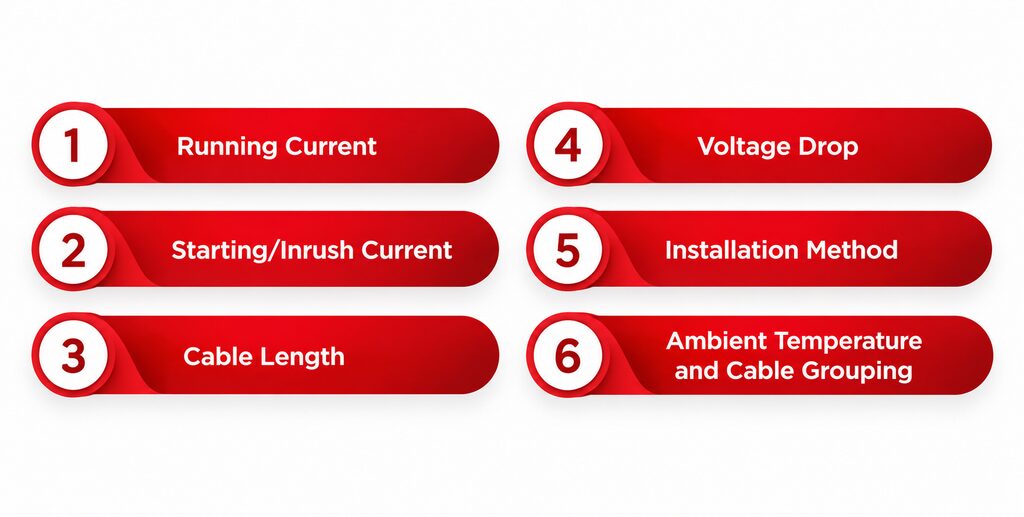
1. Running Current
AC’s technical features and rated current must be checked; the current-carrying capacity of the wiring must match the actual load.
2. Starting/Inrush Current
Normally, compressors and other motor-driven components may draw higher current at start-up. If the cable is able to handle this interim inrush current without any overheating or voltage drops, then it’s fine.
3. Cable Length
Even if the appliance is identical, a short and a long cable run don’t necessarily require the same conductor size.
4. Voltage Drop
As resistance on a cable increases, the voltage drop occurs, and the equipment may be less efficient. For an AC circuit, length larger conductor is required to reduce voltage drop.
5. Installation Method
Is the cable concealed in a wall? Installed inside conduit? Exposed? Bundled with several other cables? These conditions affect the cable’s ability to dissipate heat and, in turn, its allowable current-carrying capacity.
6. Ambient Temperature and Cable Grouping
Grouping several loaded cables or operating in high ambient temperatures can reduce the cable’s ability to dissipate heat; hence, the installation environment is also a factor during cable selection.
Is 2.5 Sq. mm Wire Enough for a 2 Ton AC?
Cable selection involves more than ampacity. Therefore, it is wise to get the circuit evaluated against the manufacturer’s electrical requirements rather than blindly selecting 2.5 sq.mm for a 2 ton AC wiring. Also, factor in the AC’s startup features, rated current, cable length, installation method, voltage drop, grouping, and ambient temperature.
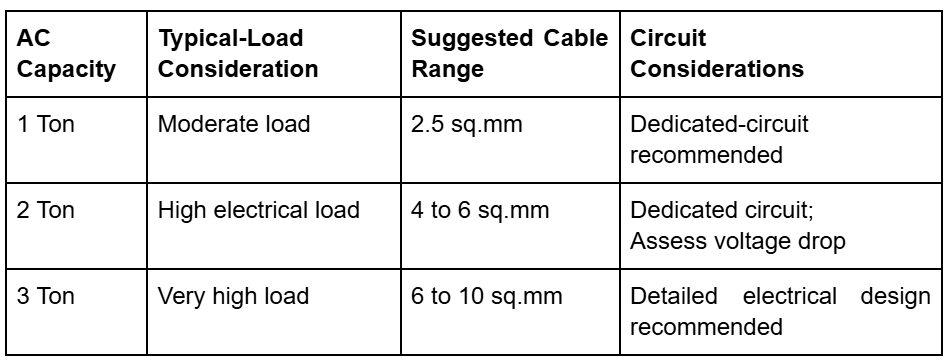
2 Ton AC Wire Size: Quick Reference Table
The following table is a general starting reference.
What Type of Cable Should You Use for an AC?
Copper offers high electrical conductivity and excellent durability; therefore, for domestic AC installations, prefer copper cables. Parallel, good copper + bad installation is still bad wiring. As such, the cable’s quality, exact size, earthing, proper terminations, appropriate protective devices, and features like flame-retardant or low-smoke insulation also influence the decision.
How to Choose the Right Cable for Your AC Installation
The 3-step approach may be followed:
Step 1: Check the AC Nameplate
First and foremost, the manufacturer’s documentation or AC nameplate must be verified, followed by a power consumption check, rated voltage, rated current, and maximum current.
Step 2: Determine the Current
Never estimate the current by the tonnage of the AC; go through the electrical specs from the manufacturer and find the design current.
Step 3: Calculate the Cable Length
Measure the actual route the cable will follow, meaning the distance between the DB and the AC; add a termination allowance + installation margin.
The Bigger Picture: Don’t Let the Cable Be an Afterthought
Your AC may be the star of the room, but it’s your cable that quietly delivers power without excessive heating, unnecessary voltage drop, or repeated electrical issues. Use the manufacturer’s specifications, consider the installation conditions, consult a qualified electrical professional, and get it verified when planning the 2-ton AC copper wire size.
Need Reliable Electrical Wires for Your AC Installation?
Explore Vilvex cables. Whether you’re wiring a new home or upgrading an existing electrical system, choosing the right cable is just as important as choosing the right appliance.
Frequently Asked Questions
1. What cable size is recommended for a 2-ton AC?
4 sq.mm copper cable is an acceptable recommendation for a 2-ton AC. When installation begins, inspect the conduit; check the current rating, cable length, and ambient temperature, as supported by the AC manufacturer’s specs and local electrical codes.
2. Does AC cable length affect wire size?
Cable length is indeed a factor; the longer the AC cable run, the greater the voltage drop. That being said, to lessen the voltage drop, an extended cable run may require a larger size.
3. How do I calculate AC cable size?
AC cable size is measured based on current capacity, voltage drop, and installation conditions, followed by safety checks using relevant electrical standards and the manufacturer’s recommendations.