
A hospital is a healing shelter where people are treated for diseases, depression, and injuries, advised for reasonable relaxation, and brought back to a healthy life with the help of trained caregivers and proper medical facilities. They are centres of hope and faith. But behind the medical facilities and the serene walkways, you will come to notice a sophisticated electrical network operating 24/7. Right from respirators and scanners to critical care lighting and lifesaving equipment, hospitals rely heavily on uninterrupted power. Because of this, electrical fire safety is a life-or-death concern here, more than a mere technical issue.
The best option to rule out the threat of fire is the installation of fire-resistant cables in hospitals. Unfortunately, this option is often sidelined and not taken with the deserved seriousness.
This write-up examines the importance of FR-cables, identifies the situations where they are essential, and deliberates on how the right cabling system ensures the safety of human lives, assets, and organisational credibility.
Why Electrical Fire Safety Is Essential in Hospitals
Unlike residential or commercial institutions, hospitals do not have a ‘from and to’ working hours; they serve around the clock. The patients admitted here are for serious reasons; as such, in the event of an electrical emergency, immediate evacuation of these patients becomes difficult. A small spark is enough to halt the surgery ward, handicap the critical care unit, put the patient’s safety at risk, hinder the staff welfare, block the emergency exit mechanism, retard the power supply to life-saving devices like oxygen cylinders, or bring the entire hospital to a standstill.
That’s why safe cabling systems for hospitals are essential.
Electrical Fire Risks in Hospitals: What Healthcare Professionals Need to Know
The electrical network in hospitals is always under stress due to high-density electrical installations, heavy surgicals, and emergency backup generators- all operating simultaneously. In such a sensitive environment, chances of electrical fires increase significantly if the cables are outdated, overloaded, or inadequately insulated. And better not to talk about ordinary cables that easily wear out, emit harmful gases, and allow flames to spread quickly when subjected to intense heat in such an ambience.
Common Causes of Electrical Fires in Hospitals
Electrical fires in medical centers usually stem from a combination of factors, including:
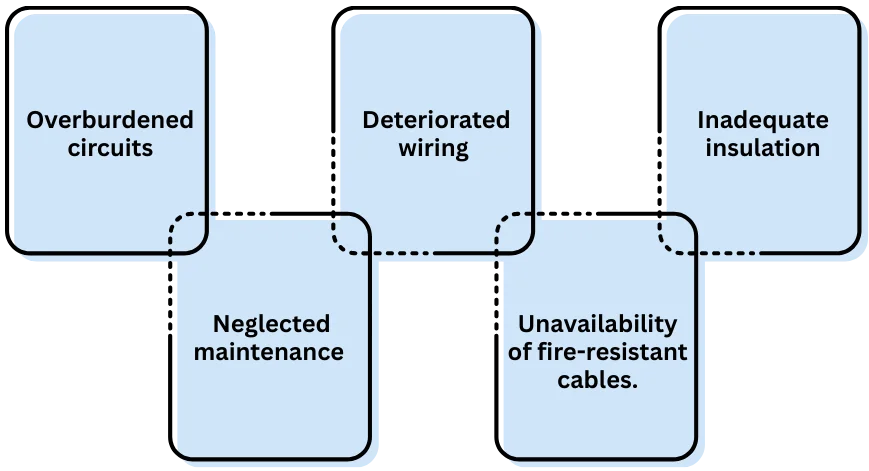
- Overburdened circuits
- Deteriorated wiring
- Inadequate insulation
- Neglected maintenance
- Unavailability of fire-resistant cables.
Many old-age hospitals still use traditional cables, which are not made to withstand intense heat or stop the spread of flames. This is where the FR cabling solutions, that are truly safe, contribute to a difference.
When ordinary cables easily catch fire, fire-resistant cables prevent sparks, slow down the spread of flames, and release fewer toxic fumes in extreme temperatures. FR cables continue to supply power for a specific period, during a fire, guaranteeing the flow of electricity to vital systems, making their role crucial. Additionally, these fire-safe electrical cables limit fire damage, thereby protecting patients, staff, rescue workers, property, and the equipment during an emergency.
Risk-Prone Hospital Belts Requiring Mandatory FR Cables
Hospitals have critical zones and emergency rooms that present a serious threat during fire accidents. In such areas, the fire spreads in seconds, and this happens because of the restricted air passage, controlled movement, and the presence of sensitive devices and electrical systems in hospitals. To ensure a non-stop power supply to emergency rooms, devices, surgicals, property, and personnel, the use of fire-resistant cables in hospitals is mandatory. The FR cables for healthcare facilities are a blessing in such institutions as they are designed to perform under high temperatures, preventing the propagation of fire and minimizing the emission of harmful gases. They support an uninterrupted supply, contributing to patient safety and emergency operations in compliance with hospital fire safety regulations.
And the areas covered are:
- Critical / Intensive Care Unit (ICU/CCU)
- Perioperative Care Unit / Operating Theatre
- Accident-Prone Area / Emergency Room
- Central Monitoring Area
- Substation
- Fire Alarm
- Safety Control Room
- Emergency Escape lighting
- Evacuation Lift
- Electrical Shafts/Cable Tunnels and Service Ducts
Lasting Benefits of Using Fire-Resistant Cables in Hospitals
When you purchase the FR cables for the first time, their initial cost may seem higher, but their long-term advantages significantly exceed the expenses:
- Patient and staff safety
- Prevent the spread of fire caused by electrical breakdowns
- Compliant with fire safety regulations
- Zero or low maintenance cost
- Preserving the hospital’s reputation and upholding patients’ beliefs
Above all, fire-safe electrical cables save lives by providing valuable time and immediate protection during an emergency, which is made possible through careful planning and expert consultation with trustworthy suppliers, such as Vilvex Cables.
Trusted Cable Manufacturers Matter in Healthcare Projects. Why?
To ensure safety and long-term performance in hospitals, the cable manufacturers must provide technical assistance, quality products, and genuine service. As a certified cable manufacturer, Vilvex supplies products that take care of all these key essentials, besides prioritizing safety regulations, adopting advanced insulation technology, and ensuring dependable performance. Vilvex’s fire-resistant cables deliver reliable performance by maintaining power stability even in extreme temperatures that are a normal scenario in hospitals and healthcare environments.
FAQ
- Why are hospitals at higher risk of electrical fires?
Hospitals are service-oriented; they operate 24 hours a day, 7 days a week, and so does their power supply, which often becomes overloaded when connected to various electrical components. These overloaded cables lead to frequent breakdowns, fire sparks, making the need for hospital electrical fire safety measures mandatory.
- What do you mean by Fire-resistant cables, and how do they function?
Fire-resistant cables are specifically engineered to withstand intense heat and extreme temperatures. During a fire, they slow down the propagation of fire, release less fumes, and still help maintain the flow of power to electrical systems.
- Are fire-resistant cables mandatory in hospitals?
Fire-resistant (FR) cables are strongly recommended as the best solution for electrical safety in hospitals. In many healthcare centres in India, these cables are mandatory for critical life-saving systems, including oxygen apparatus, surgical equipment, electrical shafts, fire alarms, emergency lighting, and evacuation routes.