
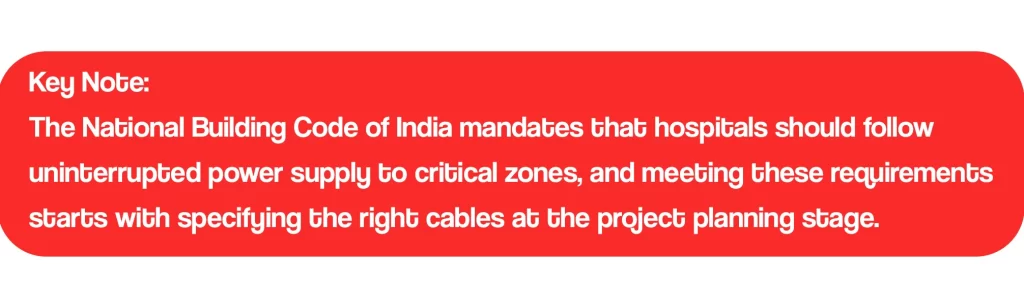
A hospital infrastructure carries significant day-to-day activities and functions, and this rushed atmosphere requires reliable functional quality of every system. 24/7 power supply in hospitals demands reliable electricity flow to each system, such as ventilators, cardiac monitors, OT lights, ICU systems, and dialysis machines.
In this context, a single electrical failure in hospital wiring systems can escalate into a major medical crisis. The cable that carries electricity matters, and the insulation of fire-resistant cables in hospitals makes qualitative benefits to overall safety and functional efficiency.
Let’s explore how quality wiring for hospitals ensures 24/7 power safety and functional quality through each system and infrastructure.
Why a 24/7 Power Supply for Hospitals is Critical
A hospital infrastructure is the most demanding ecosystem that demands a seamless flow of electricity. Unlike offices or commercial spaces, hospitals carry significance towards electricity, and measurement of downtime is on the lives of people.
Imagine this: when power fails in an ICU for even a few seconds, the life support systems on patients, premature infants in incubators, and patients in the middle of surgery come at a major risk.
According to recent studies, electric risks in hospitals are a major factor to look into. The metrics include:
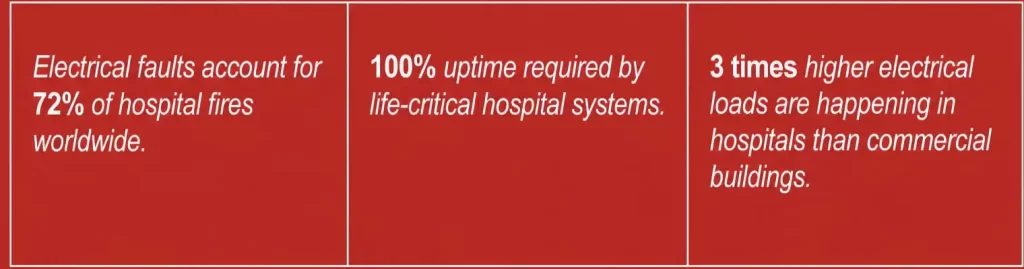
In this regard, hospital wiring systems must carry quality, durability, and safety standards, and it is not an infrastructure goal to achieve but rather a safety mandate.
Challenges in Hospital Electrical Infrastructure
Hospital wiring systems face a unique set of challenges, and understanding these challenges is the first step toward solving them and making right decisions.
- High & Fluctuating Loads
CT scanners, MRI machines, and surgical equipment draw a massive amount of power that stresses the electrical cables constantly and decreases capacity over time.
- Fire Risks
The use of substandard cables catches fire quickly and releases toxic smoke, which turns into a massive electrical fault and casualty.
- EMI Interference
Electrical cables that run alongside medical monitoring lines create interfaces that disrupt diagnostic readings.
- Moisture & Chemical Exposure
Hospital environments use disinfectant and have higher humidity. Both of these can degrade cable insulation and lead to earth faults.
These challenges in hospital environments demand the installation of premium electrical cables for resilience and safety and reducing potential risk in healthcare settings.
Role of Premium Cables in Hospital Safety
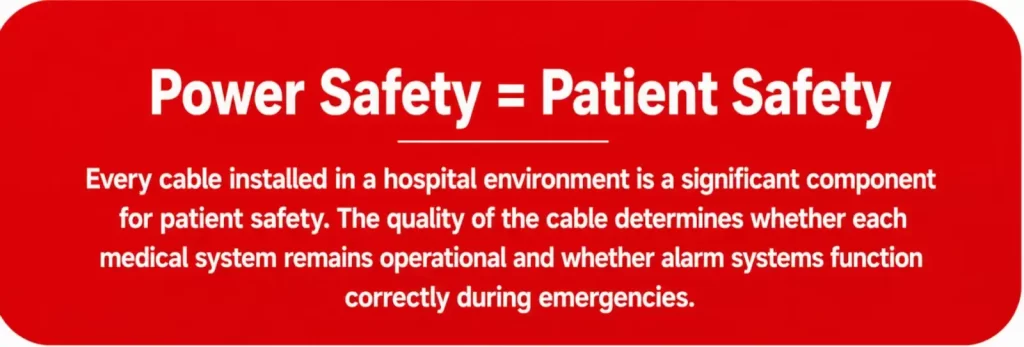
For securing safety and reliability, the use of premium cables matters more than ever. In hospitals, premium cables are designed to meet safety standards, fire resistance, insulation integrity, and durability under continuous loads.
Let’s break down how premium cables and reliable wiring solutions in hospitals directly protect both patients and infrastructure.
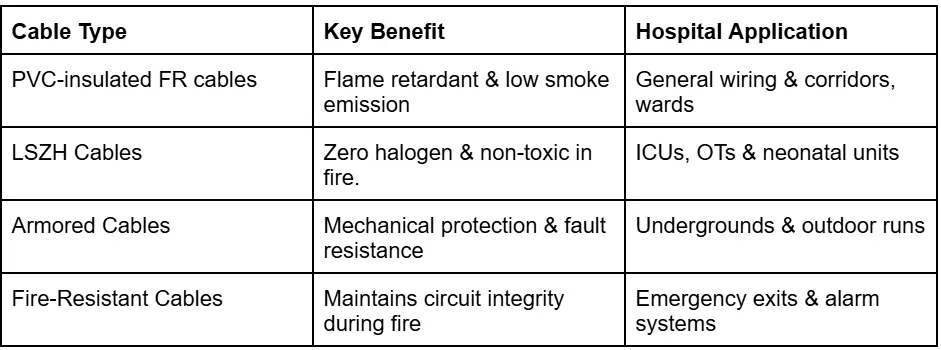
Key Insight:
PVC-insulated cables are the global standards for hospital wiring because they deliver measurable and clear reasons. The simulation of PVC-insulated cables maintains integrity across temperature ranges that would degrade ordinary rubber.
At the same time, fire-resistant cables for hospitals maintain circuit integrity even while any potential fire hazards happen and ensure emergency lighting, fire alarms, and evacuation systems remain operational during crisis situations.
Best Practices & Reliable Wiring Solutions for Hospitals in Kerala
The healthcare sector in Kerala has grown significantly, and this growth brings quality decisions in electrical infrastructures. The climate conditions in Kerala (high humidity, heavy monsoon seasons, and coastal salinity) place additional stress on electrical insulation. Through the use of the best cables for hospitals in Kerala, these risks are reduced.
This list includes:
- Choose IS: 1554/IS: 694 certified cables.
- Use FR or FRLS rate cables in high-density areas.
- Ensure separate channels for electrical and communication cables.
- Conduct load calculations before sizing cables to avoid thermal overloading.
- Schedule annual wiring inspections.
- Install earth leakage circuit breakers.
Vilvex Cables: Built for Every Demand
Engineered electrical cables make every critical ecosystem operate in safety and durability. In this regard, Vilvex cables deliver PVC-insulated, fire-resistant, and FRLS cables that meet the exact demands of hospital wiring systems. These engineered electrical cables are combined with thermal stability, flame retardance, and long service life to deliver reliable wiring solutions in hospitals in Kerala. Upgrading durable electrical infrastructure with the right and high-quality cables is the backbone of securing a safe healthcare ecosystem, and Vilvec cables advance these factors effectively.
Power your hospital the right way with high-quality cable solutions from Vilvex cables.
FAQs
A hospital infrastructure runs for life-critical equipment (cardiac monitors, ventilators, OT lighting, and dialysis systems) that cannot tolerate any power disruptions. A failure in a hospital power supply can directly affect a patient’s life, and in this regard, a reliable 24/7 power supply is important to ensure safety and operational continuity.
The best cables for hospitals are PVC-insulated (flame-retardant) for general wiring, LSZH (Low Smoke Zero Halogen) cables for ICUs and OTs, and fire-resistant cables for emergency circuits.
Insulation of premium electrical cables improves hospital safety effectively. They reduce the risk of electrical faults, limit fire propagation and toxic smoke emission, and maintain consistent electrical performance.