
You have electrical appliances and electrical circuits everywhere. The wires that connect them are very important to ensure that your appliances are working properly, and electrical cables that work behind the scenes have a major role in ensuring that. The electrical cable are getting hot, which can damage and overall affect the performance of your appliance and hence negatively impact your productivity.
There are many reasons why an electrical wire gets hot, like an overloaded circuit or a loose connection or an inaccurate cable size. This is why you need cables that are apt for your building and electrical load. With premium electrical cables like Vilvex, you can ensure that your cables are not getting hot, causing problems for your electrical system.
This blog will give you a guide on the seven major causes of electrical wire overheating that can damage the electrical system.
Is it Normal for Electrical Wire to Get Warm?
This might be a question that is lingering in your mind. To be real, some warmth is normal. The resistance caused by the electrical current flow through the wires can produce a small amount of heat. The amount of heating could depend on many factors.
- Current
- The resistance of the conductors
- Installation conditions
- Ambient temperature
So, how can you identify if your wires are overheating?
The wires that become unusually hot can emit a smell, change their colour, or cause damage to their insulation. And these symptoms should not be ignored at all. Each electrical wire has a different threshold to withstand the high temperature. So, it is ideal to check the cables’ design and rating in reference to your need before buying the cables.
Common Causes of Electrical Wire Overheating
Here are the major common wire heating causes to overheat to keep in mind to ensure that your electrical system is safe.
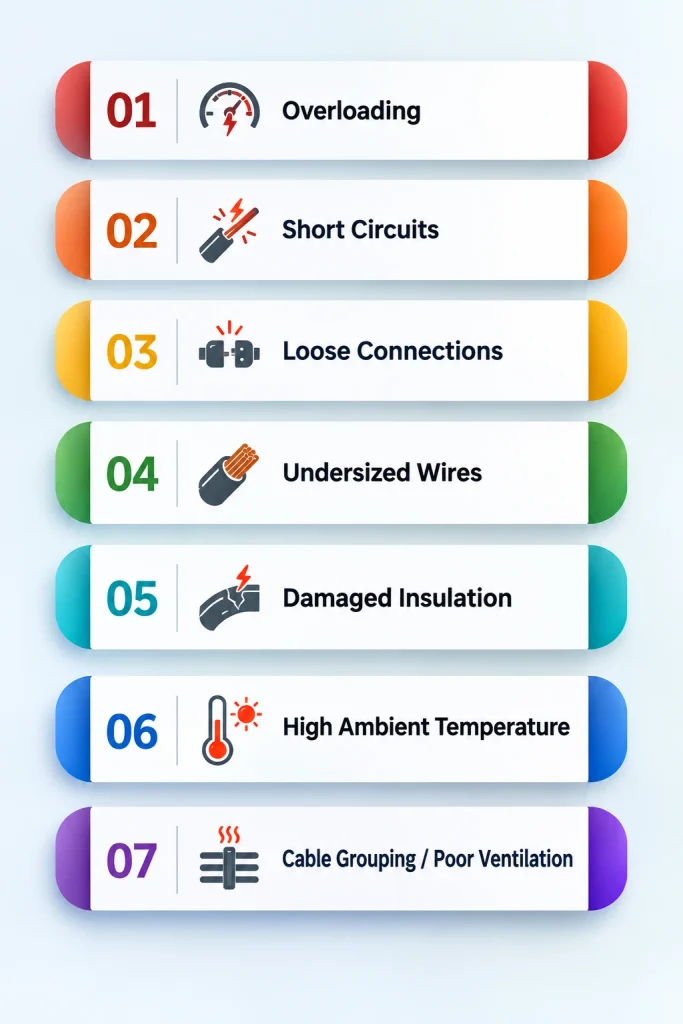
- Overload Circuit
One of the major causes why an electrical wire gets hot is the overload of the circuit. When your electrical circuit is loading too much current, exceeding its capacity, the wires can have excessive heat. This can happen when multiple high-power appliances are connected to the same circuit.
Circuits should be designed for the expected load by considering the environment and the load of the appliances connected, along with appropriate protective devices.
- Undersized Cables
If you are using a cable that is not enough for the current demand, it can cause excessive heat in the circuit. When you select the cable, you should understand the current load, the installation method, the temperature exposed to the cables, and the application requirements.
Replacing the fuse or breaker with a higher-rated one will not solve the problems and safety risks unless the cable capacity is not addressed properly.
- Loose Terminal Connection
Another major issue that can cause overheating of the electrical wires is the loose connections, especially at the switches, sockets, terminals, or any distribution equipment, which can increase resistance at the connection point. This is the major cause of the localised heat generation in the wires.
The signs of loose connection could be discolouration in the wires, a burning smell, some kind of buzzing sound, or a warm socket or switch.
- Poor-Quality Conductor
Conductor quality is important for the electrical circuits. If the quality of the conductor is poor, it will heavily affect the resistance and performance of the system. Incorrectly manufactured conductors can have higher resistance than expected, which will cause excessive heat generation.
This is why electrical wire safety depends not only on the installations but also on the quality of the cables you use.
- Excessive Cable Length and Voltage Drop
When the cables run longer, the electrical resistance will also be greater. The cable should be selected appropriately for the distance and load, voltage drop, and heating, which are the main concerns.
The cable sizing should be an important factor for the current capacity and length of the installation.
- Too Many Cables Grouped Together
If you are installing multiple cables together, it can cause heat to dissipate. There should be proper grouping or arrangement while installing the different types of electrical cables to ensure the capacity of the cables for carrying the current.
When designing installations, the engineers and electricians need to keep in mind the relevant derating.
- Poor Installation or High Ambient Temperature
The ability of a cable to dissipate the heat it produces could be reduced while placing it in a high surrounding temperature. The poor installation practices can also contribute to overheating of electrical cable. The cables should be installed according to their intended applications and manufacturer’s requirements.
Damaged insulation, inappropriate routing, or unsuitable installation conditions should not be ignored.
Why Choose Vilvex Cables for Quality and Safer Wiring?
Having a quality cable in an important part for ensuring electrical safety. With Vilvex Cables for one of the best cable manufacturers in Kerala with applicable standards and specifications. We focus on delivering quality cables that show reliable performance even if there are multiple applications in the system. By aiming to support a safe and dependable wiring system, we aspire to create a healthy environment in the electrical ecosystem in all the infrastructure.
FAQ
- Why does my electrical wire get hot?
Electrical wires can become warm because current flowing through a conductor produces some heat due to electrical resistance. Excessive heating, however, can result from an overloaded circuit, undersized cable, loose connections, poor-quality conductors, excessive cable length, cable grouping, or unsuitable installation conditions.
- Is a hot electrical wire dangerous?
An unusually hot electrical wire can indicate an electrical problem and should not be ignored. Excessive heat can damage insulation, reduce cable life, and potentially create a fire risk. If a wire or connection becomes very hot, smells burnt, changes colour, or shows visible damage, have it inspected by a qualified electrician.
- How can I stop electrical wires from overheating?
Prevent overheating by using appropriately sized cables, avoiding circuit overloads, ensuring connections are properly installed, using suitable protective devices, and following recommended installation practices. Cable selection should also consider factors such as cable length, ambient temperature, grouping, and the intended electrical load.