
Most people often miss this question: Does the wire inside your wall cost you money or not?
A cable carries electricity rather than using it, and for that, cables matter more than ever. A good quality electrical cable creates a reliable connection for this electric power to flow smoothly. But here’s the catch: most people often miss buying good-quality electrical wire for their homes.
An electrical wire efficiency is therefore ensured through its quality and value. A quality-driven electrical cable wastes less energy, but in the case of a poor-quality electrical wire, it wastes more and gets hot while functioning and affects the electricity bill.
Let’s see how a quality electrical cable affects your electricity bill.
How Do Electrical Cables Lose Energy?
A poor and low-quality cable solution often leads to low cable resistance and power loss, because it generates heat as it lacks the capacity to hold energy.
Here are five things that decide how much you lose energy:
- Resistance
Lower is better, and it mostly depends on the material.
- Current
When there is more current, more loss will be there.
- Cable length
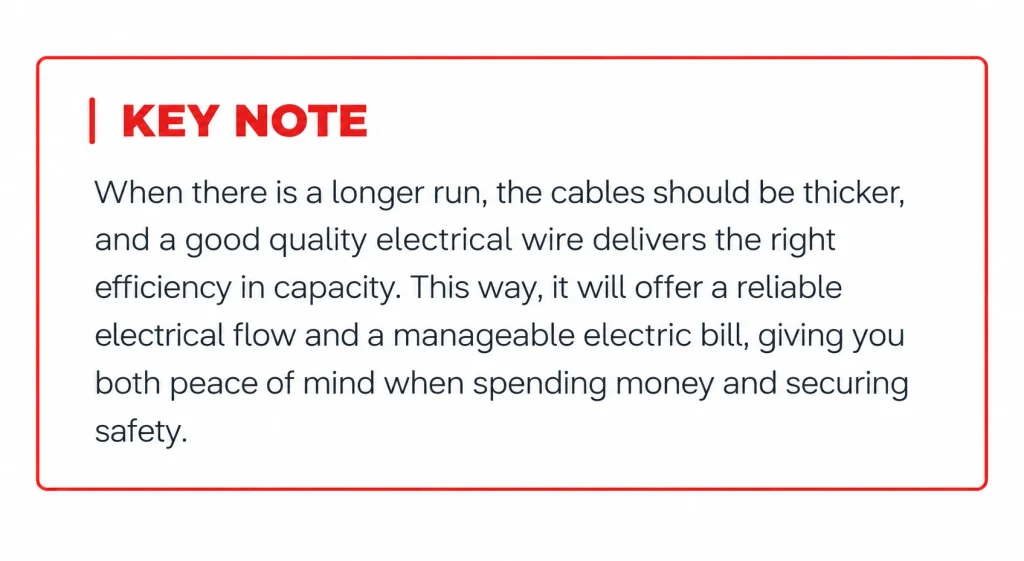
A longer cable offers more resistance.
- Conductor size
A thicker conductor gives space for smooth electric flow.
- Connections
Every joint can add extra resistance.
Does Copper Quality Matter?
The quality of copper matters more than ever. Copper is popular because it conducts electricity in a proper and smooth way. But at the same time, you need to ensure whether the cable you use has pure copper, because implore, thinner standards, or cheaper metals all raise heat resistance.
Here, it is noted that more heat and more copper wire electricity loss for the same load will happen and lead to the overall electrical capability of your space. That is why a good quality electrical wire is important to install in your space to secure smooth current flow and reduction in power loss.
Can an Undersized Cable Increase Power Loss?
When you use a thin cable, it pushes too much current through the space and leads to a hike in the heat, voltage drops, and energy waste. Thin cable installation adds up to more energy loss and affects your electricity bill and, over time, your whole safety ecosystem too.
How Cable Length Affects Energy Loss
Let’s look at how the cable length affects energy loss. Here’s how that looks for a 2.5 sq mm copper carrying 10 amps, which showcases its energy loss and where you would see it.
How Poor Connections Can Waste Energy
When there is poor connection or a bad joint, it will lead to energy loss. This includes:
- Loose terminal
- Poorly crimped lug
- Rusted contact
These factors lead to heat production, and this warmth affects energy waste and hikes in the electricity bill. In this context, use proper connectors and get your wiring ensured and checked properly from time to time.
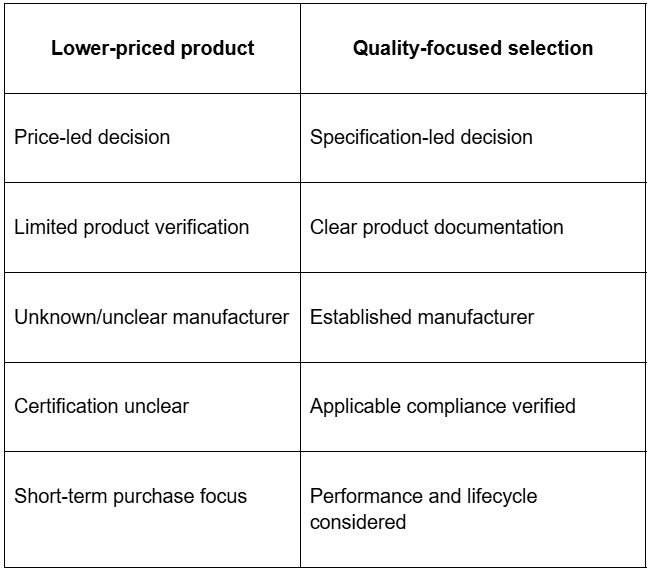
Does a More Expensive Cable Always Save Electricity?
Price alone does not guarantee the efficiency of a cable. Because if the chosen cable is in the wrong size or loading capacity, it will also lead to cable power loss. That is why a certified cable in the right size and proper installation makes a better job.
A cable with the right material, the right size, proper certification, and correct installation makes the whole environment safe and secure. And that is why a cheaper cable is a red flag and will affect the whole ecosystem.
6 Things to Check When Buying Electrical Cable
- Material of the conductor (pure and high-grade copper).
- Cross-sectional area (match it with your load and cable length).
- Quality standards and certifications.
- Insulation (heat resistance and moisture).
- Manufacturing quality.
- Intended application (home wiring, air conditioners, outdoor lines, and industrial use).
How to Choose an Efficient Cable for Your Project
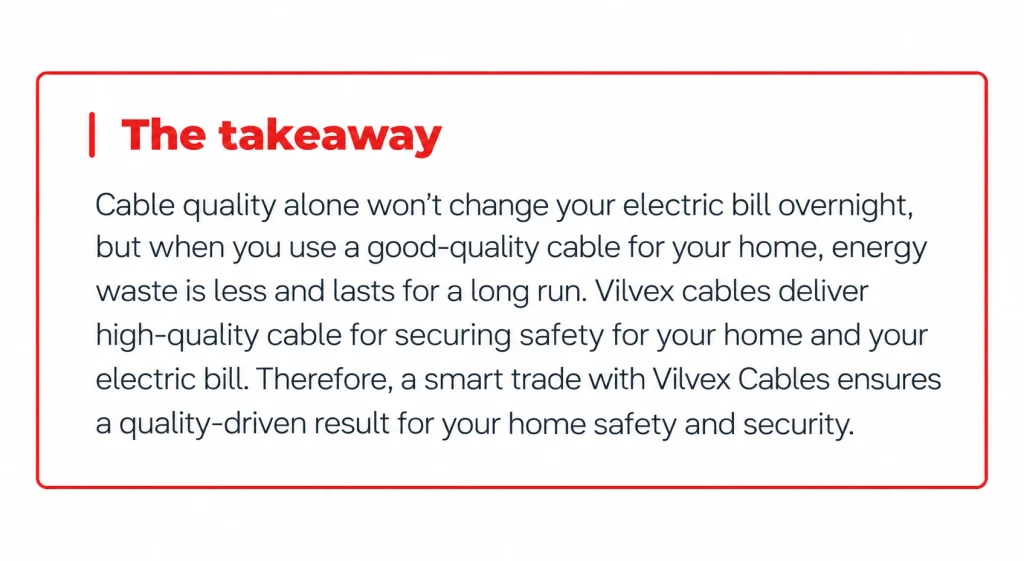
Choosing a quality electrical cable is a smart choice for securing your living ecosystem.
Here’s how you can make the decision:
- Look at the load you plan to run.
- Measure the distance of the cable route.
- Choose a cable with a safety margin.
- Buy certified cables from a reputable brand.
- Install cables by a licensed electrician.
Connect with Vilvex Cables and pick the right cable for your load and distance.
FAQs
- Does electrical wire quality affect electricity consumption?
Yes, the quality of cables does affect energy loss and consumption, because if you use poor-quality wires, higher resistance, more energy loss, and a higher meter count will be there, and also potential safety risks over time.
- Does thicker wire reduce electricity loss?
A larger and thicker wire reduces electricity loss, as it has lower resistance, which will offer less energy waste, especially on longer runs and heavy loads.
- Is expensive electrical wire always better?
No, using the right-sized, genuine copper and properly certified electrical wires is the better option than choosing high-priced ones.
- Can loose connections increase electricity consumption?
A loose connection does add higher resistance at the joint, which eventually creates heat and energy waste.