
The quality of the wires you use is important to ensure the optimal performance of the electrical system. When people hear this and understand that they have to complete an idea about the quality of the wire before installation, this question will pop up in them.
“How can I actually understand the quality of wire by just looking at it?”
Choosing the cables is not just about the price or appearance. This blog will help you with how to identify good quality electrical wire before installation, helping you identify specifications and other details.
Why Should You Check Electrical Wire Before Installation?
Electrical wire quality check before installation can help you in many ways.
- Confirming the required specification matches the product
- Identifying any damage in the insulation
- Manufacturer verification and product marking
- Verifying certifications and standards
- Avoid installing unsuitable or incorrectly specified cable.
- Reduce the possibility of costly replacement later.
10 Things to Check Before Buying Electrical Wire
Let’s go through the points in a electrical cable quality test you have to do before you installing electrical wires for your building.
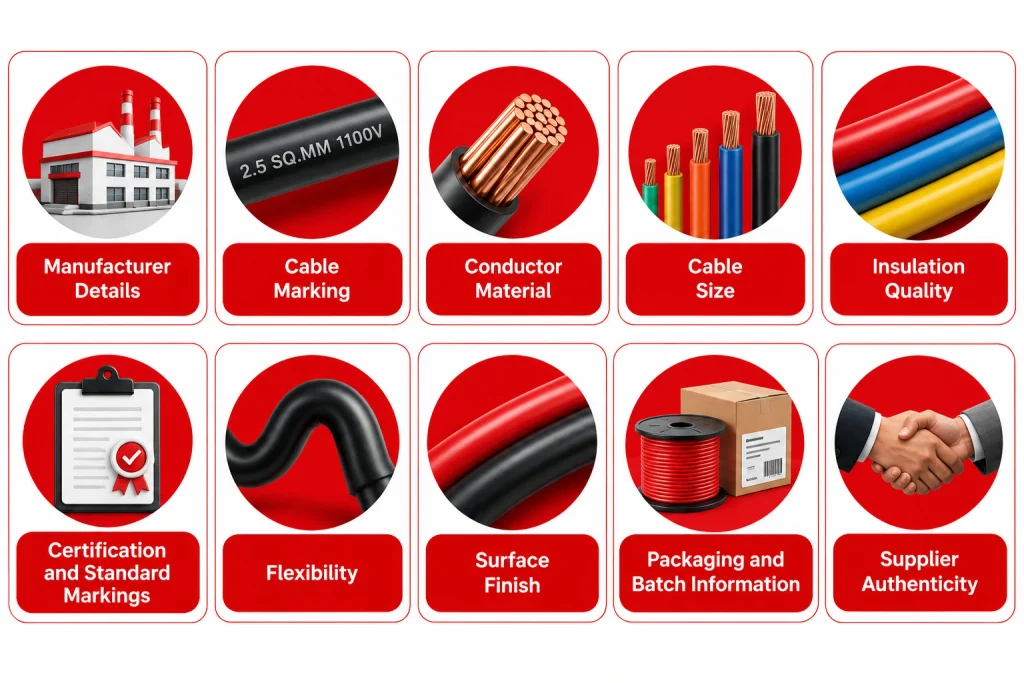
- Manufacturer Details
The details of the manufacturer, like their name, the identity of the product, the availability of the contact, and product information, should be checked and verified to ensure that you have the right product.
- Cable Marking
There should be specifications and markings printed on the cable or provided product that give the quality of the electrical cables you have bought.
- Conductor Material
Ensure that the cable you have bought uses copper or another specified conductor material that suits your requirement and the industry standards.
- Cable Size
There are multiple sizes for electrical cables. You need to verify that the electrical cable that you have chosen is appropriate for the electrical load you are anticipating.
- Insulation Quality
There should be consistent insulation for the cable without any cracks or cuts. Any form of deformation or visible defects makes the wires disqualified for any purpose.
- Certification and Standard Markings
The cable should meet the necessary Indian standards, and there should be proper certification information for the verification.
- Flexibility
According to the cable type and application, there should be an appropriate flexibility for the usage. Do not assume that more flexibility means better cable.
- Surface Finish
A consistent finishing for the cable is important to ensure that there are no obvious manufacturing defects or unevenness.
- Packaging and Batch Information
Check the packaging, batch or identification information, and the details of the product, and ensure that this information matches with the cable you have ordered.
- Supplier Authenticity
Purchase from a reputable supplier and manufacturer. An authorised distributor or established electrical supplier can give you confidence in your cables.
How to Check the Cable Markings
As a buyer, you should look for the important information on how to identify good quality electrical wire:
- Manufactures or brand
- Cable type
- Conductor size
- Voltage rating
- Applicable standard
- Certification information where applicable
- Batch or identification details
It is also to be noted that even if your cable has printed markings, it does not alone guarantee the authenticity of the product. The genuine electrical wire will have the product information consistent across the cable, packaging, documents, and certificates.
How to Check Whether the Wire Is Really the Stated Size
For a proper electrical cable inspection, there should be visual inspection and professional verification. Apart from checking just the overall thickness, there should be cross-sectional area verification. Hence, with just visual inspection, the actual conductor area cannot be confirmed. This is where a professional verification is needed.
How to Check Copper Conductor Quality
The first thing to do is to confirm the conductor material matches the product specification. Consistency in construction and visible damages should be checked. The colour alone is not enough to prove the conductor purity or compliance. Professional testing can verify the resistance and other conductor properties.
How to Check Electrical Wire Insulation Quality
There are some unavoidable points you should consider for verification of electrical wire insulation quality.
- Cracks and cuts
- Uneven thickness
- Brittleness
- Discolouration
- Surface damage
- Inconsistent construction
The visual is a preliminary check only. Proper insulation performance should be verified with appropriate testing.
What Certification and Standards Should You Look For?
While buying an electrical cable, ensure that it has the applicable Indian Standard (IS) for the specific wire type and application you are choosing. The BIS Standard Mark should be verified with the associated licence or certification where it matters. BIS ISI electrical wires could be described as the quality electrical cables that could be used in the commercial or industrial projects.
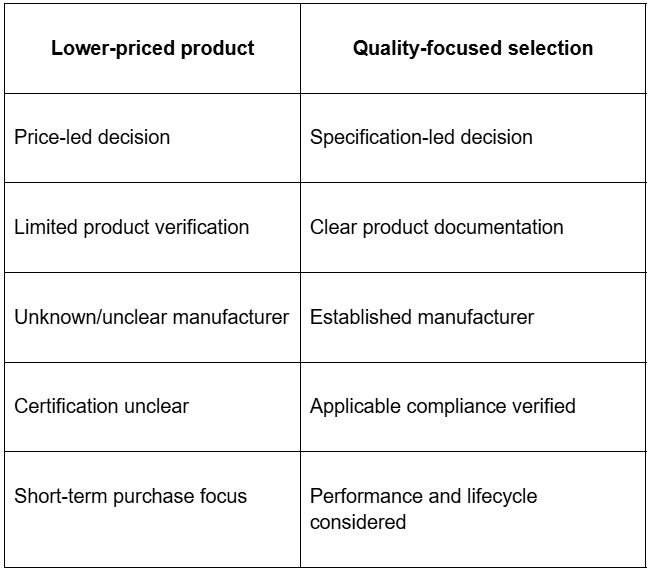
Cheap Electrical Wire Vs Quality Electrical Wire
Here is an easy-to-understand comparison between cheap electrical wires and quality electrical wires.
Why Choosing a Reliable Cable Manufacturer like Vilvex Matters
Vilvex Cables focuses on delivering cables that are not compromised on quality and a cable that you can rely on. We ensure consistency in quality for the manufacturing with transparent product traceability and documentation. With all the applicable standards and requirements for the needs of the electrical load and system complexity. It is our aim to make electrical cable purchasing easy, even for buyers with no strong electrical cable knowledge. Easier verification and selection of wires to make your life easier.
Choose Vilvex cables if you are not compromising on the quality of your electrical system!
FAQ
- How can I check electrical wire quality?
Check the manufacturer details, cable markings, conductor specifications, size, insulation condition, applicable standards, certification information, packaging, and supplier authenticity. For critical applications, professional inspection and testing can provide more reliable verification.
- What should I check before installing electrical wire?
Before installation, verify the cable type, conductor size, voltage rating, insulation condition, applicable standards, certification information where required, and suitability for the intended load and installation environment.
- Is flexible wire better than rigid wire?
Neither is universally better. Flexible and rigid wires are designed for different applications. The appropriate choice depends on the installation method, movement requirements, electrical specifications, and applicable standards.