Have you ever thought about keeping an electrical cable buying guide? Well, you can laugh it off until you realise electrical cables are the cornerstone of your home, office and any workspace safety.
Many people walk into the store and buy any random cable they get their hands on – no enquiry about the brand, certifications, heat resistance and other specific but important details. Ah yes, money could be a deciding factor. If discounts are on, then they are automatically sold. They might even think to themselves, “It’s just a cable, how different can one cable be from another?” Not much! Just different enough to cause risk to property and even life. A cable might look the same from the outside, but can have entirely different characteristics inside. Some may show immense heat resistance, some may fail too soon in overheat conditions, and worse, some may cause fatal fires. Hence, it’s extremely important to learn about which wire to choose for what purpose and ask certain questions to make that apt choice!
Why Asking Questions Should Be A Norm?
Every brand goes through a rigorous level of checking, certifications and experiments to bring out the best version of their products. However, as consumers, it’s also your responsibility to ask questions before buying them so that you do more than just check the specs. You are in fact, protecting your property and your loved ones, too. Imagine buying a cable based on just affordability, for quick needs and having to spend a lot of extra money on the same because of the defects and the repair works or risks that it causes later. In India, especially, many wires claim to be ‘safe’ but in reality lack quality standards and certifications.
Therefore, a good electrical cable buying guide will always begin with the right questions.
5 Crucial, But Priority Questions to Ask Before Buying
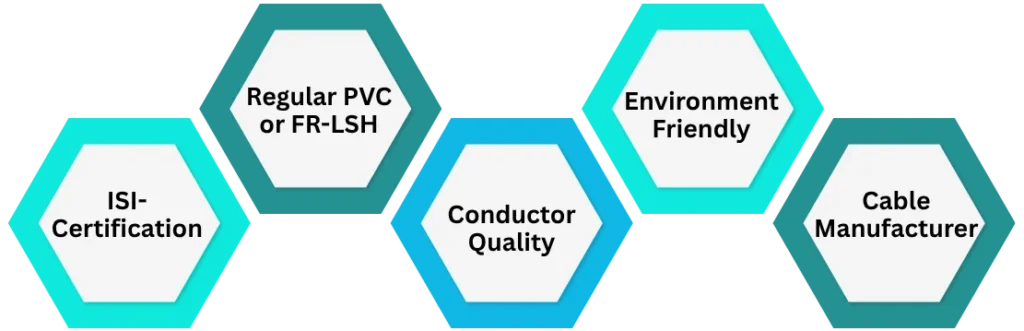
A. ISI-Certification
The most basic eligibility a wire should have before it is given out for purchase in India is certification. Choosing ISI-certified electrical cables in India means you are choosing safety for yourself, your family and your whole property. If the cable has an ISI mark, then it means the cable has undergone rigorous testing for different criteria like heat resistance, smoke resistance, durability, etc. If there’s no certification, then better skip buying because there’s clearly no guarantee provided by the brand!
B. Regular PVC or FR-LSH
Along with choosing ISI-certified electrical cables in India, it’s also important to choose FR-LSH PVC cables for extra safety. Gone are the days when people used to opt for regular PVC cables. Especially in India, where residential buildings and warehouses face a high chance of getting sparks and eventually fatal fires because of several factors like hot and humid climate, overloaded circuits, fluctuating voltage and obviously poor-quality wiring. Regular wires can quickly catch fire and release immense smoke that makes it harder for people to escape during such emergencies. However, FR-LSH or Flame-Retardant Low Smoke Halogen-Free cables help reduce smoke and other toxic gases.
C. Conductor Quality
Why would anyone be bothered about the metal that’s inside the cable? Well, you have to be if you are genuinely bothered about wire durability. Cables that use pure copper have higher quality and lower resistance to heat. Cheaper cables often use aluminium or copper-coated conductors that will eventually lead to voltage drop or even huge fires.
D. Environment-Friendly
Don’t blindly purchase cables. Keep in mind the purpose, where you want your cable wires to be placed. Do you want wires that align with indoors, outdoors, underground or near water? This is very important because every environment requires an exclusive cable. And wrong choices can lead to wear and tear, corrosion, current leaks and worse scenarios. For example, if you choose indoor cables for external purposes, then it sure can withstand harsh climates to a small extent; however will not be able to combat rain, UV rays and extreme temperature changes. For this, you need cables with extra insulation customised for external usage. And if your home is near the coast, choose cables that resist corrosion and salt air.
E. Cable ManufacturerBrand reputation matters the most. That’s why out of many brands, people love and trust Vilvex cables the most. Choosing unknown brands is such a risk; however, if you go for Vilvex, it means you are getting every spec from batch tests to warranty, durability and all the needed certifications and marks.
Tools for Testing Electric Cable Quality
You don’t need to invest in any expensive tools, but rather go for these three simple tools:
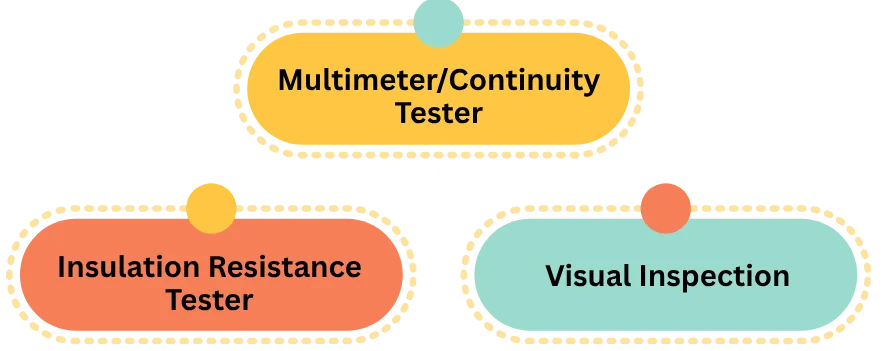
1. Multimeter/Continuity Tester
Helps check if the conductor is connected or not
2. Insulation Resistance Tester
Checks current leakage by monitoring insulation resistancy
3. Visual Inspection
Checks everything from the manufacturer name, size, ISI mark, to insulation.
FAQ
1. What can I do to check for cable credibility and safety?
First, check for the relevant ISI mark, see if the conductor material is copper (which is the best and purest), monitor insulation resistance for cracks/thinness of wires or current leakage.
2. How do FR-LSH wires stand out?
Normal PVC cables emit a lot of toxic gases, which makes it difficult for emergency escapes and breathing in case of fire or spark. However, with FR-LSH cables, they are built in a way to resist fire, produce very little smoke and absolutely no halogen gases when burnt. The level of safety and security is much higher than other PVC cables.
3. Why is ISI certification important for electrical wires?
Just like how you check the warranty period of appliances that you buy and check for specs, it’s important to give the same scrutiny to the cables that you purchase. ISI certification means the cable has undergone plenty of experiments and tests, and has passed all the required benchmarks set according to Indian safety standards. Without ISI marks, you can’t be sure of the insulation, the durability of the cable, the quality of the material or conductor or the resistance.