When considering the risk of fire in medical centres, the first thing that comes to one’s mind is the fiery flames. In fact, smoke frequently poses a greater risk, particularly in hospital settings where patients may be bedridden, unconscious, motionless, or connected to critical medical equipment. In such conditions, low-smoke cables for hospitals are essential as they support emergency electrical systems, thereby saving lives during a crisis.
So, here we learn more about low-smoke cabling and its necessity for healthcare rescues.
Why Smoke Is More Dangerous Than Fire in Hospitals
Smoke is a silent killer. It reduces visibility and spreads very fast. Smoke contains harmful gases that, if inhaled, can make people unconscious in a fraction of a second.
We would have heard that in many fire-related incidents, it is the smoke that acts more as a villain than the fire. Because;
- Patients encounter breathing problems.
- Bedridden Patients might not be able to leave their room on their own.
- Patients may struggle to navigate smoke-filled corridors and are forced to depend on hospital staff for assistance.
Studies on fire safety research state that thick smoke can induce anxiety, confusion, and breathing problems hours before the flames reach those inside. Therefore, hospital electrical fire safety prioritises smoke suppression alongside fire resistance.
Understanding Hospital Evacuation Challenges
Hospital evacuations are very different from those in offices or residential buildings because they are complicated and laborious, involve a high degree of teamwork because of factors like disabled or bedridden patients, patients on ventilation or life support devices, the need for continuous power in infant and intensive care units, and staff being accountable for multiple patients at once. When the hospital undergoes such decisive testing times, the emergency systems must be fully operational, visibility should be clear, and enough air ventilation must be ensured because materials that produce dense smoke during a fire can critically disrupt evacuation efforts and significantly increase the risk of fatalities.
How Conventional Cables Increase Evacuation Risks
Traditional electrical cables use PVC insulation, which, when exposed to extreme heat, releases thick black smoke, blinding escape routes and safety signage, damaging sensitive electronic systems, and rapidly reducing visibility. Given that hospital connectivity runs through ceilings, service cavities, and surgical spaces, the combustion of PVC cables can rapidly fill these pathways with toxic and corrosive gases, posing severe threats to patients and rescue personnel and increasing evacuation risks.
What Are Low Smoke Cables?
FR-LS or fire-retardant low-smoke cables, also referred to as LSZH (low-smoke zero-halogen) cables, are specifically designed to reduce smoke and toxic emissions during a fire, in addition to restricting the spread of fire. These cables strictly comply with international safety standards and are approved for use in critical settings, such as hospitals, healthcare centres, and other wellness institutions.
Why Low Smoke Cables Are Critical in Hospital Evacuations
When a fire occurs, every second counts, and if it happens in a hospital, one can well imagine the gravity.
Low-smoke cables for hospitals aid rescue attempts in several ways:
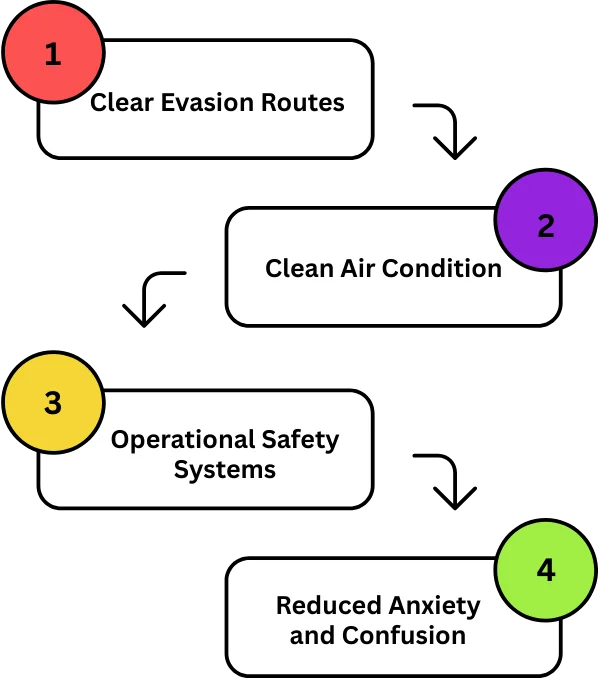
- Clear Evasion Routes
Staff can guide their patients to the emergency exit safely as low smoke emissions maintain visibility in corridors and staircases.
- Clean Air Condition
The low-smoke cables release fewer harmful gases; as such, patients and employees can breathe a sigh of relief for a short while, without having to suffer any serious respiratory issues.
- Operational Safety Systems
FR-LS cables for hospitals ensure that essential systems, such as emergency lighting, public announcement audio, ambulance assistance, burglar alarms, etc., that rely on efficient cabling remain uninterrupted and operational during critical situations.
- Reduced Anxiety and Confusion
During high-stress evacuations in hospitals, minimal smoke from cables reduces disruption.
Role of Low Smoke Cables in Fire & Emergency Systems
During emergencies, hospitals rely on a variety of lifesaving and firefighting systems, including fire detection, alarm networks, rescue lighting, public communication systems, smoke suppressors, and ventilation devices, all of which are designed to work dependably. Even when subjected to fire, these vital systems should function. For that, safe cabling is required.
For safe cabling, low-smoke cables manufactured by trusted companies such as Vilvex are the best as they continue to function even during a fire. Research studies emphasise that cables that fail early may compromise visibility, impede evacuation, and turn even the most sophisticated safety systems useless.
Long-Term Benefits of Using Certified Low Smoke Cables in Hospitals
Fire safety in hospital settings is not about putting out flames, but it’s about safeguarding life during the most vulnerable times. By selecting certified low-smoke cables, hospitals can definitely increase evacuation safety.
The benefits of low-smoke cabling extend beyond emergencies.
- Compliance with modern fire safety regulations
- Safeguarding life-saving equipment from harmful smoke
- Minimal expenses for restoration following a fire
- Reduced risk while evacuating a patient with fire-safe hospital wiring.
Foreseeing the long-term readiness of healthcare infrastructure, certified safe cabling systems for hospitals that include low-smoke cables are a mandatory investment and not a luxury upgrade in today’s modern world.
FAQs
- Why do we consider low-smoke cables as a mandatory requirement during hospital evacuations?
During a fire, while evacuating a bedridden or immobile patient from his/her room, one should keep in view the visibility of the passage, air ventilation, and survival chances. In such a scenario, low-smoke cables lessen the emissions of harmful gases and thick smoke.
- How are traditional electrical cables different from low-smoke cables?
Traditional electric cables are economical and used widely in residential areas and standalone habitats, but these cables, when exposed to extreme heat or fire, emit dense smoke and toxic gases, which can seriously affect people staying there. Conversely, low-smoke cables like FR-LS cables for hospitals emit less smoke and harmful gases; they maintain consistency with respect to power flow and aid in restricting the spread of flames in the event of fire. As such, they are ideal for commercial and healthcare centres.
- Which cable can ensure patient safety in hospitals?
Certified flame-retardant low-smoke cables are the best to ensure patient safety in healthcare facilities.