The purpose of a circuit breaker indicates one thing: keeping a safe environment from potential hazardous situations. There is a significant presence of frequent circuit breaker tripping, caused by a lack of use of standardised and quality-driven cables.
The presence of reliable and trusted safer electrical cables marks its accountability in the case of circuit breaker tripping, and Vilvex cables actively contribute to remark the vitality of ensuring accurate power flow with their accurate cables.
In this blog, we are exploring the matter of circuit tripping, causes, safety tips, and the presence of Vilvex cables in generating cable quality for preventing the cause of tripping.
Understanding the Reasons Why Circuit Breakers Trip and Their Causes
The idea of installing circuit breakers is for the prioritisation of a reliable environment to look upon, and a lack in different aspects of wiring provides accountable reasons for possible safety incompetence.
Let’s look into the reasons why circuit breakers trip:
-
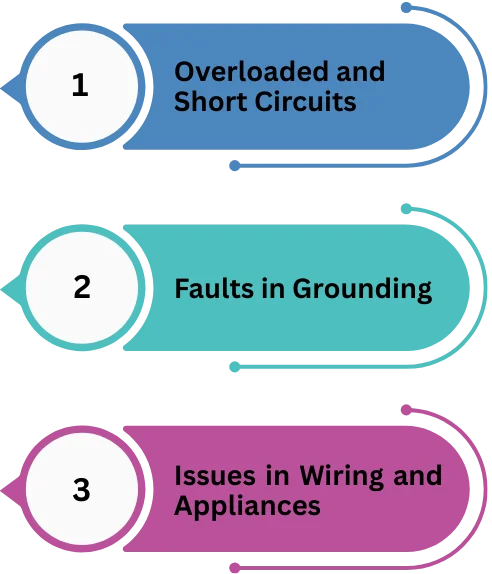
- Faults in Grounding
Faults in grounding lead to massive hazards, which, if a live wire touches the ground or grounded part of systems, potentially lead to circuit breaker tripping.
- Overloaded and Short Circuits
The exceeding of electrical loads, due to the connection of too many high-power devices in one circuit, affects the circuit breaker capacity. A short circuit happens when a live wire touches a neutral wire, which also causes a sudden spike in voltage.
- Issues in Wiring and Appliances
Internal wiring sises in devices or systems send irregular currents, and the accountability towards poor-quality or old cables causes the building up of heat and inconsistency in flow, which triggers circuit tripping.
The outcome of circuit tripping through inconsistent loading and wiring issues can potentially result in losing safer environmental conditions at home and affect market reputation and credibility in workspaces.
How Poor-Quality Cable Causes Circuit Breaker Tripping
Through the understanding of circuit tripping, it is crucial to consider the role of low-grade cables.
Here’s how poor-quality cables navigate tripping in circuit breakers:
- Poor-quality cables carry insufficient currents, which contribute to loading and the buildup of heat.
- Lack of quality in cables leads to poor insulation as well as higher resistance, which contributes towards voltage dropping and heating.
- Low-quality cables are equipped with non-standard manufacturing, inconsistency in safety testing, and improper sheathing, causing impact instability.
- The daily usage and dependence on low-quality cables lead to quick degradation and faster wear and tear.
It is crucial to understand how the insulation of poor-quality cables is the sole reason for circuit tripping. And this essentially led to the insulation and vitality of electrical quality cables in India to break free from circuit tripping.
What are the Things to Consider in Diagnosing Circuit Breaker Trips
Understanding the functional side of different circuit breakers, how to rest, and the means of how to properly handle if the breaker does not reset is, should be taken into consideration.
Let’s delve into different types of circuit breakers and how poor-quality cables affect their performance:
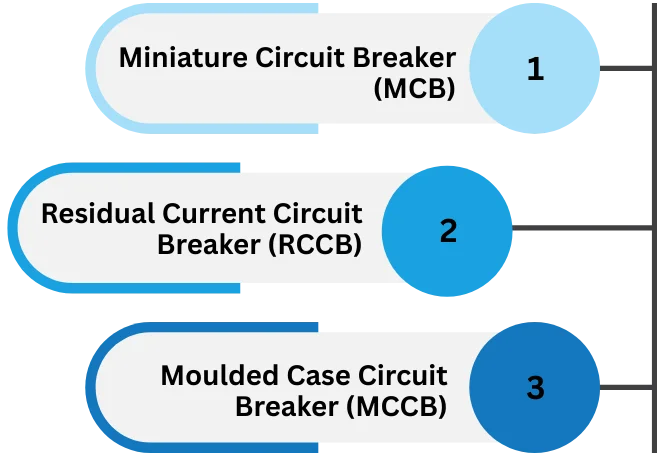
1. Miniature Circuit Breaker (MCB)
The MCB contributes to protecting against overload and short circuits, and if the constant tripping is being performed, it’s because the connected cables are most likely to be undersized or of low-grade quality.
2. Residual Current Circuit Breaker (RCCB)
These perform to detect earth leakages and grounding faults, and with the insulation of cheap or degraded cables, can lead to tripping.
3. Moulded Case Circuit Breaker (MCCB)
MCCBs are used for handling higher loads in industrial or commercial settings, and the tripping of MCCBs showcases the resistance in conductors, which is caused by low-quality cables.
The resetting of these circuit breakers confirms to safety, and it can be performed through switching off plugs and systems and turning on the breaker that is tripped, but if it stays off and trips again, it is evident that cables are overheated or insulation is cracked.
What to understand in this scenario is that, when a circuit breaker is not resting as it should, it is most likely following a clear warning that it is detecting serious problems and the breaker is preventing them.
In this context, it features for the insulation of quality-driven ISI certified cables, which actively performs to mitigate potential damages and circuit tripping.
The Vilvex Cables Role in Quality Cables for Electrical Safety
As we have discussed circuit tripping, using higher-quality cables enhances safety and reduces the tripping frequency.
Vilvex advances safety and quality in manufactured and tested cables. The accountability of copper cables in India is where electrical safety is being defined, and Vilvex Cables actively navigate the matter well.
Here’s how Vilvex defines the qualitative role of cables that prevent circuit tripping
- The occupancy with high-conductivity copper and engineering of cables supports consistency in current flow and prevents overheating.
- The high-grade PVC insulation qualifies for zero earth leakage, which directly minimises the RCCB trips.
- The implementation of low-resistance conductors and load-optimised cable design qualitatively impacts the mitigation of overloading and circuit tripping.
- The maintenance of structural integrity and compliance with safety benchmarks actively supports cable deformation or breakdown, which ensure safety.
Different types of circuit breakers perform different irregularities, and the salient cause of these reactions is defined by the accountability of cables. The higher the occupancy with low-quality cables, the higher the possibility of circuit breaker tripping and damage. Vilvex provides accountable effects in quality-driven cables, which mitigate circuit tripping and ensure safety.
Secure your space with low tripping and higher occupancy with Vilvex cables.
FAQ
- Do Vilvex cables provide quality wires that prevent circuit tripping?
Yes. Vilvex does provide quality cables that are safety-tested, higher conductivity, and insulation, which prevent circuit tripping.
- What are the steps I should follow to reset my circuit breaker tripping?
First, turn off and unplug devices, and in the electrical panel, push the tripped breaker back on; if it does not reset, there might be issues in the wiring.
- What to do when the circuit breaker does not reset after several attempts?
It means that there are some serious challenges, such as overloading, short circuit, leakage due to cable wiring, and it is better to take that into consideration.