
‘Electrical wiring? We will decide later. For most homeowners, it’s a casual statement, an afterthought.
Concealed within walls and ceilings, electrical cables are the silent heroes of every household. They are unseen, but work silently throughout the day and night, keeping everything connected from your morning drink to your late-night sleep. However, a cable, be it high-quality or premium, cannot deliver the expected performance unless its installation is proper.
Core Pillars of Safe Cable Installation
For long-term cable life, reduced maintenance, and safety, proper installation is very important. Electrical systems are based on four elementary principles:
- Selecting certified high-quality cables
- Choosing the right cable size for each application
- Adhering to the safe installation guidelines.
- Engaging professional electricians
The team of 4, when they work together, ensures your home’s electrical system remains safe, efficient, and long-lasting.
Here are five common cable installation mistakes, and how to avoid them.
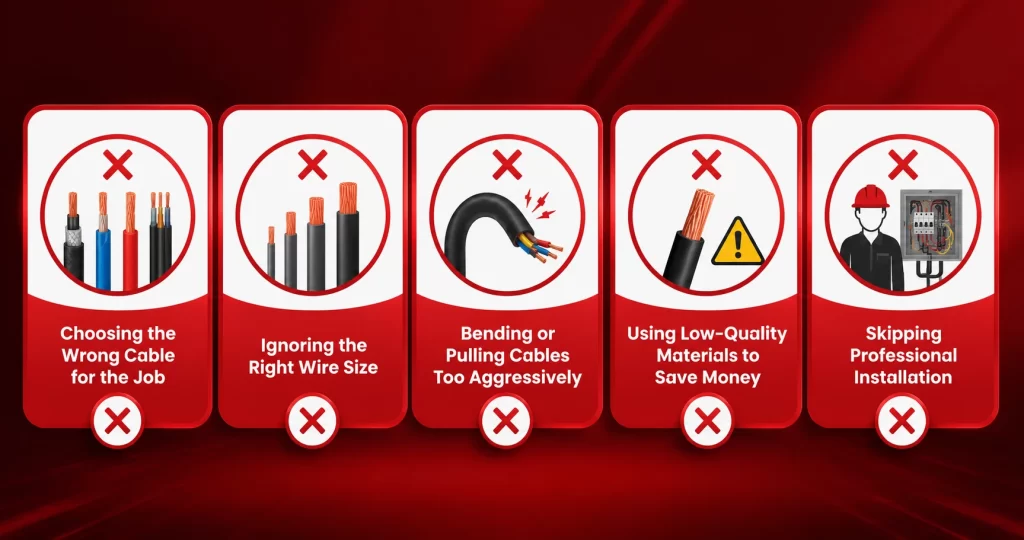
1. Choosing the Wrong Cable for the Job
Many homeowners think that all wires are the same. In fact, different environments and electrical loads call for different types of cable. Cables used in areas with higher fire resistance or heat tolerance show a degraded performance over time. As such, if appropriate cables are used from the start, they will help prevent overheating and thus increase the life span of your electrical system.
2. Ignoring the Right Wire Size
Ignoring the right wire size is one of the most common installation errors people make. Small cables do not have the capacity to handle high electrical loads; they will heat faster, waste power, and wear out faster. The same rule applies to powering an air conditioner, induction hob, water heater, or heavy-load appliances. The right cable size is very important for safety and efficiency; therefore, before you proceed with the cable specifications, seek an expert, qualified electrician’s advice.
3. Bending or Pulling Cables Too Aggressively
Cables aren’t made from rubber bands; excessive pulling, twisting, or gentle bending of cables during installation can damage the conductor and insulation without leaving any visible marks, and invisible marks often become the reason for failure over time. Effective cabling involves smooth bends, sufficient support, minimal handling stress, and protecting contact with sharp edges.
4. Using Low-Quality Materials to Save Money
Normally, we tend to save a little everywhere, be it on dress, food, or dwelling. Sadly, trying to save money on electrical cables can be one of the most expensive decisions you make down the line.
Low-quality wires that cost less usually have inferior conductors, uneven insulation, and inferior manufacturing standards.
Pure copper electrical wires are great conductors; in Kerala, many homeowners rely on them because of their lower power loss and long-term reliability. Another key point is certification; it’s a sign of compliance with quality and safety standards, hence ideal to purchase products from ISI certified cable manufacturers India. Remember, when it comes to electricity, ‘cheap’ rarely stays cheap.
5. Skipping Professional Installation
YouTube tutorials are excellent for making puddings or learning a dance. For house wiring? Not really.
Inexperienced workmanship invites faulty terminations, loose contacts, improper earthing, and overloaded circuits, reducing your cable’s life. But an experienced electrician can install an electrical system professionally that will function better, last longer, and give you more peace of mind.
Common Mistakes to Avoid During House Wiring
If you wish the cable to last long, avoid choosing cables based only on price, avoid overloading electrical circuits, avoid making tight cable bends, avoid ignoring manufacturer installation guidelines, avoid purchasing uncertified products, avoid delaying replacement of damaged wiring, avoid hiring unqualified installers, and avoid using the incorrect cable size. Avoiding these mistakes today can prevent expensive repairs tomorrow.
Why Vilvex is the Trusted Choice for Kerala Homes
Electrical safety is not something you compromise on quality; that’s why homeowners, electricians, builders, and contractors are turning to Vilvex cables Kerala in increasing numbers for reliable performance.
Every cable is engineered to perform with high-conductivity copper conductors, tough, durable insulation, excellent performance under challenging conditions, compliance with recognised quality standards, and long-lasting reliability for residential applications.
Vilvex Cable distributors are authorised dealers; they ensure you get genuine cables alongside reliable warranty assistance. The so-called cables are designed for residential and commercial buildings alike; they offer safe, consistent, and trustworthy performance and are suitable for new dwellings and renovated projects as well.
Conclusion: Small Installation Choices Create Long-Term Results
Small installation choices, such as quality cables, the correct wire size, proper installation practices, and experienced electricians who consider safety a priority, give you long-term results and peace of mind. That said, Vilvex cables are a perfect investment decision for an effective, efficient, durable electrical system.
Frequently Asked Questions
Preferably, 100% pure copper electrical wires Kerala that combine FR/FR LSH insulation with an ISI mark and adequate thickness to withstand humidity, moisture, and voltage variations, are best suited for house wiring.
Cables designed to slow the spread of fire are FR (Flame Retardant), whereas cables designed to emit less smoke and toxic halogen gases in case of fire, are FR LSH cables Kerala (Flame Retardant Low Smoke Halogen).
The wire size depends upon the home appliance’s power rating, the current load, and the cable length. For heavy appliances such as air conditioners, water heaters, ovens, etc., thicker cables are needed. Need better guidance? Suggest you contact Vilvex cable distributors, who would advise you on the correct electrical layout of your home.
Manufactured in Kuttur, Thrissur district, Kerala, India, Vilvex Cables are certified by the ISI mark from BIS; they have PWD and RoHS approval, and hold quality management certification ISO 9001 from TUV, Germany. The cables undergo strict quality control processes, meet industry standards, and their recognitions are a symbol of commitment to delivering safe and dependable applications.