
Inverters protect your home from sudden power cuts and high electricity buildup. In the context of Kerala’s monsoon, electric power shortages are higher, and the right home inverter installation protects homes.
But behind a well-performing inverter system, the wiring harness plays an important role. Most homeowners never think of proper inverter wiring, but when you get it right, your inverter works efficiently for a longer period of time.
Now, how can you make a proper wiring harness for inverter systems?
This question is answered through many factors and components of proper inverter wiring and installation, which make your home move forward safely. This blog guides you in understanding how the right inverter wiring harness in Kerala works effectively to secure safety.
What is a Wiring Harness?
A wiring harness is a complete, organised assembly of electrical cables and protective coverings. These connect your battery to your inverter systems and to home loads.
The wiring harness for the inverter works as a circulatory system for the power setup, and with the right wires, a stronger power supply will be delivered.
Why Wiring Harness Matters in Inverter Systems in Kerala
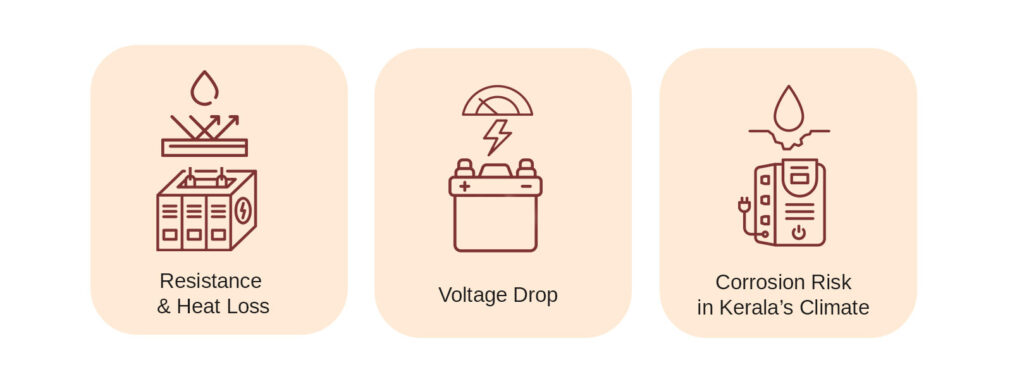
There are three critical reasons why a wiring harness for inverter systems is an essential factor.
- Resistance & Heat Loss
Undersized cables have higher resistance, which means energy comes at a loss as heat before it reaches home appliances.
- Voltage Drop
Without a proper gauge, long cables create higher voltage drops, which affects the inverter function and stresses the battery and reduces overall efficiency.
- Corrosion Risk in Kerala’s Climate
The climate conditions in Kerala, such as high humidity and monsoon, accelerate oxidation at loose and this small contact of resistance at a terminal junction causes overheating and eventually system failure.
How a Proper Wiring Harness Improves Inverter Ability
Now, let’s break down the performance impact of how a proper wiring harness improves the overall efficiency of inverter systems.
- The right gauge copper advances resistive energy loss minimisation.
- Stable voltage input is delivered, which keeps the inverter in the optimal range.
- Reduction in thermal stress and extension of inverter lifespan.
The installation of the inverter wiring harness ensures operational quality and efficiency of inverter systems. For solar inverter wiring in Kerala, this is a significant factor because panels peak for limited hours, and poor-quality wiring silently reduces every unit they generate and affects the overall function of appliances.
What to Avoid: Common Mistakes in Wiring Harness
- Using low-quality wires to cut costs leads to heat buildup and efficiency loss.
- Ignoring cable health because for longer runs of appliances, thicker cables are required.
- Skipping fuse protection can cause a surge of power and eventually destroy the entire system, accompanied by it.
- Mixing different cable gauges in one circuit creates uneven current distribution.
- Poor terminal connections create loose ends and cause trips and failures.
- Routing cables near heat sources contributes to the silent degradation of systems.
- No earthing increases shock risk and causes electrical instability.
Warning Signals of Poor Wiring in Your Inverter
The performance issues of inverter systems are delivered through wiring problems. To ensure your home is safe and secure, watch out for these warning signals:
- Frequent tripping
- The inverter is running hot under normal load
- Faster battery draining
- Flicking when a heavy appliance is in use
- Burning smell near the inverter
- Visible discolouration
Inverter Wiring Best Practices in Kerala for Installing Wiring Harness
When installing a wiring harness, taking into account these best practices improves the overall efficiency of inverter systems and appliances.
- Match in Cable Size, Load & Length
The selection of gauge and calculation of maximum current flow creates efficiency because longer runs always require thicker cables with the right cable size and length.
- Keep Cable Run Short & Direct
Keeping a shorter path from battery to inverter wiring results in lower resistance, and by planning this shorter inverter placement, it minimises unnecessary cable length.
- Protect Cables in Every Route
When installing a wiring harness, use conduit to keep cables away from heat sources and moving parts at all points.
- Secure Connections Firmly
Loose terminals are a dangerous factor, and when installing inverter wiring harnesses, keep each connection clean, tight, and properly insulated.
- Include Rated Fuse Protection
Correct installation of a rated fuse close to the battery creates a defensive measure against any hazards and failures.
- Set Proper Earthing
Earthing is effective and, by using a copper wire, protects against any potential faults and ensures stability and consistency in outputs.
- Use Qualified Inverter Wiring Experts
Taking into account Kerala’s variability in environmental factors, wiring errors may escalate gradually and to secure system efficiency, associate with professionals to assess your space and system.
The use of engineered cables secures the efficiency of the inverter wiring harness in Kerala. When you choose Vilvex for your battery-to-inverter wiring, you choose to protect the efficiency and lifespan of the entire power system.
Choose Vilvex cables and wire them safely.
FAQs
- What is a wiring harness in an inverter system?
A wiring harness in an inverter system refers to an organised assembly of cables, terminals, and connections that link your battery to your inverter and distribute power to your home. The occupancy of a qualitative wiring harness ensures safety, efficiency, and organised current flow across the entire system.
- How does a wiring harness improve inverter efficiency?
Inverter wiring harness improves efficiency by the proper size of installed cables, which minimises resistive energy and voltage drop. This advances stability and clean power from the battery, which leads to better backup and less heat generation.
- Can poor wiring reduce inverter efficiency?
Yes, poor wiring reduces inverter efficiency because the use of undersized cables, loose terminals, improper earthing, and missing fuse protection leads to potential energy loss, overheating, and premature failure.