
Imagine a full-capacity manufacturing plant in operation with automated firing and assembly lines moving in sync. And now imagine, suddenly, industrial cables are failing and then motors tripping and production stops, making the industrial environment into a costly crisis.
The reliability of every industrial operation is something that people mostly miss. Cables running beneath the floor, powering motors, sensors, and control panels, people never think about them. In modern infrastructure, high-performance cables stand as a foundational factor, and wrong cables become the weakest link in the entire system.
For a smoother operation, high-performing PVC-insulated cables are significant for eliminating unexpected maintenance costs and safety incidents. This blog explores why these cables are important for industrial operation, what happens when they are overlooked, and how to make the right electrical cables for an industry.
What Are High-Performance Cables & Why They Matter?
High-performance industrial cables are called purpose-built conductors designed to operate reliably and effectively under different industrial conditions that would compromise standard commercial wiring.
What makes them high-performance is a combination of superior materials, compliance with industrial safety standards, and precision engineering. These qualities are designed to withstand:
- Extreme temperatures
- Chemical exposure
- Mechanical stress
- High Electrical loads
- Moisture and dust ingress
Substandard or commercial cables simply aren’t built for these conditions. In an industrial ecosystem, the usage of the wrong cable builds both operational risk and safety hazards. To secure electrical safety in industries, high-performance cables are the solution as they are designed for longevity, safety, and efficiency.
The Challenges in Industrial Systems
There is a set of challenges in an industrial environment, and understanding these challenges is key to appreciating why high-quality industrial cables matter so much.
- Thermal Stress
Compressors and heavy machinery generate a significant amount of heat, and cables that run near these heat sources or carry large currents must manage thermal load. Poor-quality caves degrade over time, melt, or crack, which creates bare conductors into live fire hazards.
- Vibration & Mechanical Fatigue
Industrial machinery vibrates constantly, and over time, this movement affects cable conductors at stress points. This leads to micro-factures and eventually conductor failures.
- Electromagnetic Interference (EMI)
EMI is a growing concern as factories become more automated. Motors and inverters generate electromagnetic noise, which can corrupt signals in nearby control panels and create malfunctions in automated systems.
- Chemical & Corrosive Environments
In chemical processing, food production, and water management, chemical attacks are common. This challenge degrades a substandard cable jacket immediately and eliminates the protective layer.
- Overloading & Load Cycling
Constant switching and tripping of heavy equipment puts stress on cable insulation and affects industrial production.
These challenges will escalate if commercial electrical cables are used in an industrial environment. Only cables that are rated and of high quality will hold up to these challenges and deliver reliable operations.
Risks of Poor Quality Cables & Why PVC Cables Are the Solution?
Through low-quality cables, there are severe issues in industrial environments. They follow:
- Fire hazards are at the top of the list because the use of a substandard cable under stressed loads can ignite electrical fires and result in complete facility loss.
- Equipment damage follows closely. Through low-quality wires, cables fail, and they send unstable power to motors and control systems, causing equipment damage.
- Unplanned downtime is a financially damaging outcome because sourcing replacement and diagnosing a cable fault takes hours or even days.
- Compliance violations are another real consequence. Industrial facilities in India must meet Bureau of Indian Standards (BIS) specifications because using non-compliant cables invalidates insurance policies.
In this context, the use of PVC-insulated cables plays an important role by safeguarding industrial environments from these risks and challenges. High-performance cables are ideal for industrial use, and they carry the following components.
- Chemical resistance
- Flame retardancy and self-extinguishing
- Mechanical durability and protection
- Temperature range
- Electrical insulation and prevention of current leakage
Tips for Choosing the Right Industrial Cables
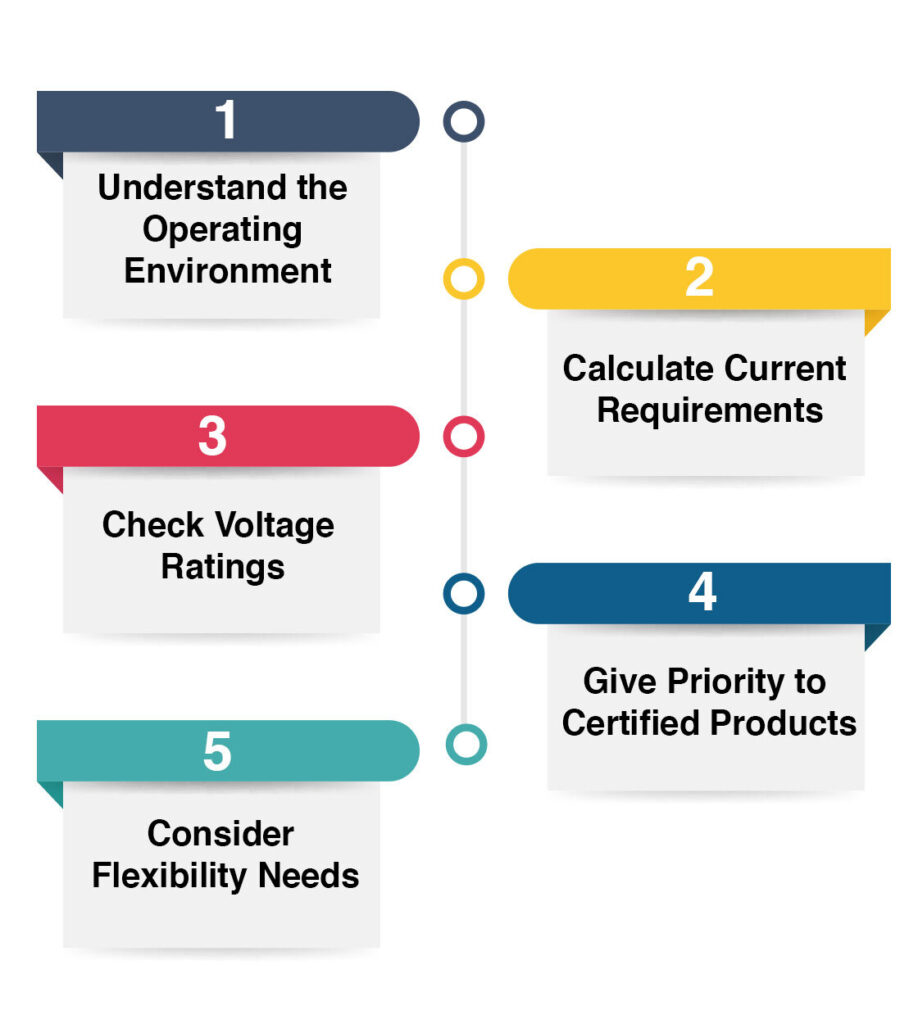
Selecting the right cable for an industrial environment is a structured decision to align with specific demands and systems. Here are some of the major factors to evaluate when choosing the right industrial cables.
- Understand the Operating Environment
Map where each cable will be installed (indoor, outdoor, near heat sources, open cable trays, chemical exposure areas) because each environment has different demands and insulation types.
- Calculate Current Requirements
Always size your cables on the basis of the expected current, frequency, grouping factors, and ambient temperatures when cables run together.
- Check Voltage Ratings
Ensure the cable voltage matches the system’s operating voltage.
- Give Priority to Certified Products
Look for cables that meet certification and safety standards for heavy-duty industrial use. This converts to better performance and safety.
- Consider Flexibility Needs
Highly flexible cable construction is efficient for moving machinery. This allocates a smoother operational quality for operations.
- Work with Reputable Suppliers
Full technical documentation and test certificates of a supplier are significant to ensure quality installation and performance. Secure a right cable supplier with application support, high-quality products, and certifications.
Why Vilvex Cables are the Right Choice for Industries
When it comes to the best industrial cables in India, Vilvex standards are at the forefront, defined by trust and consistency. The engineering manufacturing of Vilvecx cables is designed to withstand the real challenges of Indian industrial environments. Every cable carries strict quality controls, certifications, safety standards, and the use of premium materials.
Vilvex delivers:
- Premium PVC insulation and mechanical protection across the full service of the cable.
- Consistent conductor quality and stable performance under continuous load.
- Wide product range, from low-voltage control cables to heavy-duty power cables.
- BIS-certified production gives safety teams the documentation they need.
- Proven field performance across manufacturing, energy, infrastructure, and construction sectors.
- Technical and supply support to ensure the right production reaches the right application.
Engineer your reliability into every connection with Vilvex Cables.
FAQs
- What are high-performance cables?
High-performance cables are industrial-grade cables engineered with superior materials. They contain high-conductivity copper conductors and advanced insulation compounds, which deliver reliable power transmission under demanding conditions.
- What are high-performance cables important in industries?
High-performance cables ensure that the power reaches motors, control systems, and machinery without any interruptions, overheating or signal loss. They prevent potential hazards which are essential for industrial settings.
- What happens if low-quality cables are used in industries?
If low-quality cables are used in an industrial setting, it affects the overall performance and causes electrical fires, machine shutdown, equipment damage, and leads to non-compliance and violation of safety standards.