
Electrical wiring stands as the backbone of modern buildings, ensuring efficiency and safety. In this context, electrical systems depend on the quality of electrical wires, and one of the overlooked factors in electrical wiring is wire thickness.
For enhancing better safety quality-driven electrical wire thickness matters more than ever. The thickness of the wire contributes to the efficiency of electricity flow and the effectiveness towards the operation of systems. If the wiring is incorrectly sized, it leads to overheating and voltage drops in wiring.
It is significant to understand the relationship between wire gauge and electrical load, which ensures safety and efficiency in your buildings.
So, let’s break down what is meant by wire thickness, how it impacts electrical performance, essential considerations to take on choosing reliable solutions like PVC insulated wires, and how Vilvex plays a vital role in enhancing safety.
What is Wire Thickness or Wire Gauge?
Wire thickness refers to the diameter of the electrical conductor inside a wire. The measurement of wire thickness is typically done through the standardised system, known as wire gauge. This systematic measurement determines how thick or thin the electrical wire is.
The numbering of wire thickness in most wire gauge systems works like this:
- Lower gauge number = Thicker wires
- Higher gauge number = Thinner wires
For example:
10-gauge is thicker than 14-gauge, and 14-gauge is thicker than 18-gauge wire.
The electrical wire thickness directly affects the amount of electricity a cable can carry, because thicker wire contains more conductive material of copper or aluminium, which can handle higher electrical loads.
Different applications require different wire thickness levels. High-power equipment requires thicker wire because they draw electricity more often, and smaller appliances in lighting systems function accurately with thinner wires. The accuracy of wire thickness is equipped with its resistance, because thinner wires have higher resistance due to more electrical energy lost, whereas thicker wires reduce resistance by ensuring stable power delivery.
Impact of Wire Thickness on Safety & Risks of Incorrect Wire Gauge
The impact of wire thickness is essential in maintaining both electrical safety and optimal system performance. The accurate calculation of wire gauge and electrical load in designing electrical systems ensures safe carrying of the expected current without overheating or energy loss.
Because when wires are properly sized, electrical systems operate seamlessly and efficiently. This leads to quality-driven electrical performance and efficiency. But if the wire quality is thinner and the carrying amount of current is higher, it leads to several performance issues.
Let’s look into the risks of incorrect wire thickness:
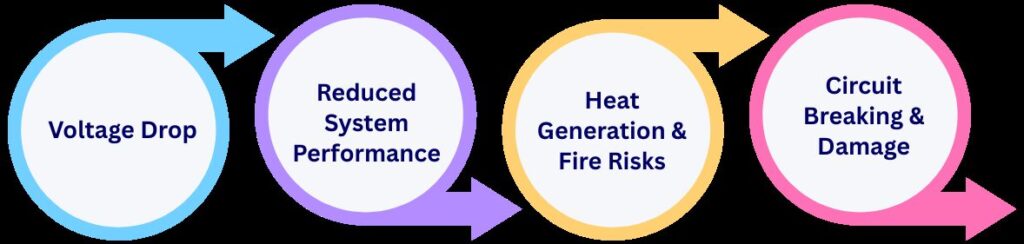
- Voltage Drop
If the wire is thinner and the voltage reaching appliances is lower than intended levels, it leads to a significant amount of voltage drop. This affects devices and leads to inefficiency, and lighting systems start to malfunction.
- Reduced System Performance
Insufficient thickness of electrical wires leads to instability in voltage and electricity supply. This affects the overall performance of equipment because of the increased energy consumption and maintenance. Both wiring infrastructure and connected appliances have shortened lifespans due to overloading and inefficient current flow.
- Heat Generation & Fire Risks
Thin wires lose excess heat, which wastes energy and accelerates wear and tear on the insulation materials. This continuous overheating weakens insulation and ignites electrical fires and safety risks.
- Circuit Breaking & Damage
Improper and inefficient thickness in electrical wires leads to instability in circuits, which generates frequent circuit breaker trips. The repeated tripping indicates improper components of electrical wiring and inconsistency in performance.
How to Choose the Right Wire Gauge for Performance
Improper installation of electrical wire thickness leads to potential risks in the overall electrical infrastructure and equipment. It is essential to understand the major considerations to look for while choosing the right wire gauge for your business infrastructure.
Here’s how to choose the right wire gauge:
- Electrical Load
The major factor to look into is the selection of the wire gauge in accordance with the current load. Each wire size carries a specific rating and current flow it can handle.
Here’s a detailed version:
- Smaller gauge wires for lighting circuits
- Thicker wires for high-power appliances
- Wiring Run
Wiring run is a major factor, because using longer wiring distances increases electrical resistance and leads to the risk of voltage drop. Using tusker wires for long-distance wiring runs helps to maintain a stable voltage level and prevent power losses and safety issues.
- Installation Setting
When selecting electrical wires, understand the environmental conditions. High temperatures of mechanical stress influence the performance of electrical cables, and choosing high-quality insulated wiring maintains safety and durability.
- Compliance
Compliance with electrical standards is a major factor to look into, because wire gauges specify safety regulations. Following electrical standards ensures the installation process remains safe and beneficial.
Why Choose Vilvex Cables for Safety & PVC Insulated Wires
Choosing the right wire thickness is important, and at the same time, the quality of wire and manufacturing efficiency matter more than ever.
Vilvex cables provide reliable electrical wiring solutions for modern electrical systems. The PVC insulation in the electrical wiring effectively supports safety and efficiency in electrical wire performance.
Here’s how Vilvex cables impact safety and performance:
- Protection from moisture and mechanical damage enhances the durability of electrical cables.
- Qualitative design withstands heat and reduces fire risks in electrical installations.
- PVC insulation advances electrical insulation performance, prevents current leakage, and ensures long-term reliability.
Wire thickness and electrical wire quality go hand in hand to deliver efficiency and performance in modern building infrastructure. Using the right electrical wire thickness, therefore, prevents overheating and reduces voltage drips to ensure system efficiency. The integration of quality-driven PVC-insulated electrical wires from Vilvex cables ensures electrical installation in durable conditions.
Ensure safety and efficiency in your electrical wire thickness with Vilvex’s PVC-insulated cables.
FAQs
- Why is wire thickness important for electrical safety?
Wire thickness supports electrical current flow safety, and proper wire sizing ensures safe current flow for higher performance.
- How does wire gauge affect electrical performance?
Electrical wire gauge affects performance due to heat generation, voltage drop, and resistance. Proper thickness allows lower resistance and table voltage levels.
- Are PVC-insulated wires suitable for home wiring?
PVC insulated wires are suitable for home wiring because they offer excellent electrical insulation, durability, and resistance to heat and moisture.